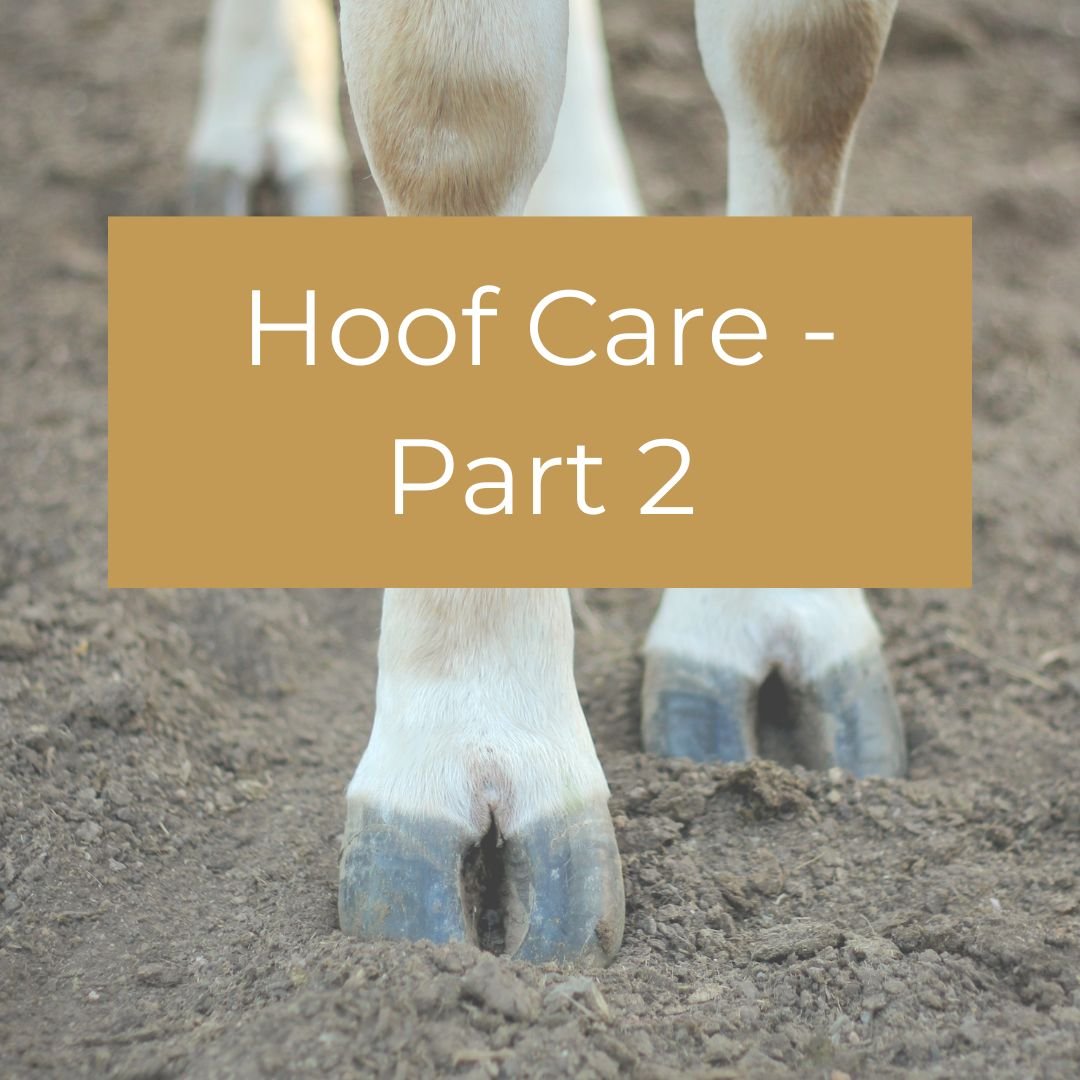
Feet come, quite literally, in all shapes and sizes. Caring for those feet, which are so fundamental to a cow’s health and happiness, also involves troubleshooting.
What can go wrong with feet and how do we treat and/or prevent it?

Common things that can go wrong with hooves
- Laminitis: this is when the laminae becomes inflamed and begins to separate from the hoof wall, leading to a whole host of issues. Causes are too much sugar in their diet, environmental factors such as standing on concrete too much, systemic infections, hormonal changes and obesity.
- Laminitis can lead to founder, which means the coffin bone has lost proper alignment. This happens because the laminae can’t keep the bone and the hoofwall together anymore. The coffin bone will sink or rotate and can lead to very severe and permanent lameness.
- A toe that’s too long: if this happens it will pull the heel forward. It can also lead to the toes cracking. The cow will try to shift their weight to have less pressure on the sore part of their feet. Unfortunately, this kind of compensation will lead to injuries in the rest of their body.
- Too thin soles: this can be due to the terrain they walk on, genetic factors and sometimes the way they get trimmed. If you get your cows trimmed by a beef cow trimmer, they will sometimes take off too much sole.
- Foot rot: the name says it all. Rotting tissue in the foot, which comes with a characteristic nasty smell. It can cause lameness in your cow.
- Digital dermatitis (DD) is a bacterial, infectious hoof disease in cows and causes painful lesions on the hoof.
- Abscess or ulcers in and around the foot are always something to be avoided and treated promptly if it does occur. An abscess is an infection that is trying to get out of the foot. It can come out from the side or the bottom.

Some interesting tidbits to remember:
- Living on concrete day-to-day can cause hooves to grow and wear faster. Living on natural surfaces promotes healthier & sturdier hooves.
- Despite the lovely temperatures, summer is actually not the best time to trim as hooves get rock hard in dry summer months.
On our 80 acres, we have all sorts of different pastures. Flat grassy plains, downhill woodsy pastures that are soft and wet in spring, silvopasture, the yard, the driveway. All different grazing options that influence their hooves in a slightly different way. Remember that what we have here in Central Alberta, is quite different from a lot of other places. Consider the climate; dry summer, long cold winter, the distances the cows have to walk to and from their water and what they eat, different types of grass and a bit of legumes.
Without fail, every cow I send into our 30+ acres of silvopasture, comes back with phenomenal looking feet. They only require very minimal maintenance. Cows that live on flat ish grassy pastures closer to home, generally require more trimming. When I let them graze down the driveway, which is long and has gravel with grass and trees on the side, they wear down a lot faster as well. That’s not to say that cows who live on rougher terrain won’t need any maintenance, but it does impact them differently than soft grass.
Long story short, look at your cows feet and they will tell you a lot. Shine, smell, shape, how they walk, all will tell you how their feet are doing and if there’s anything you can do to improve things.

Next let’s look at the different types of trimming and how to go about that.
About the Author


