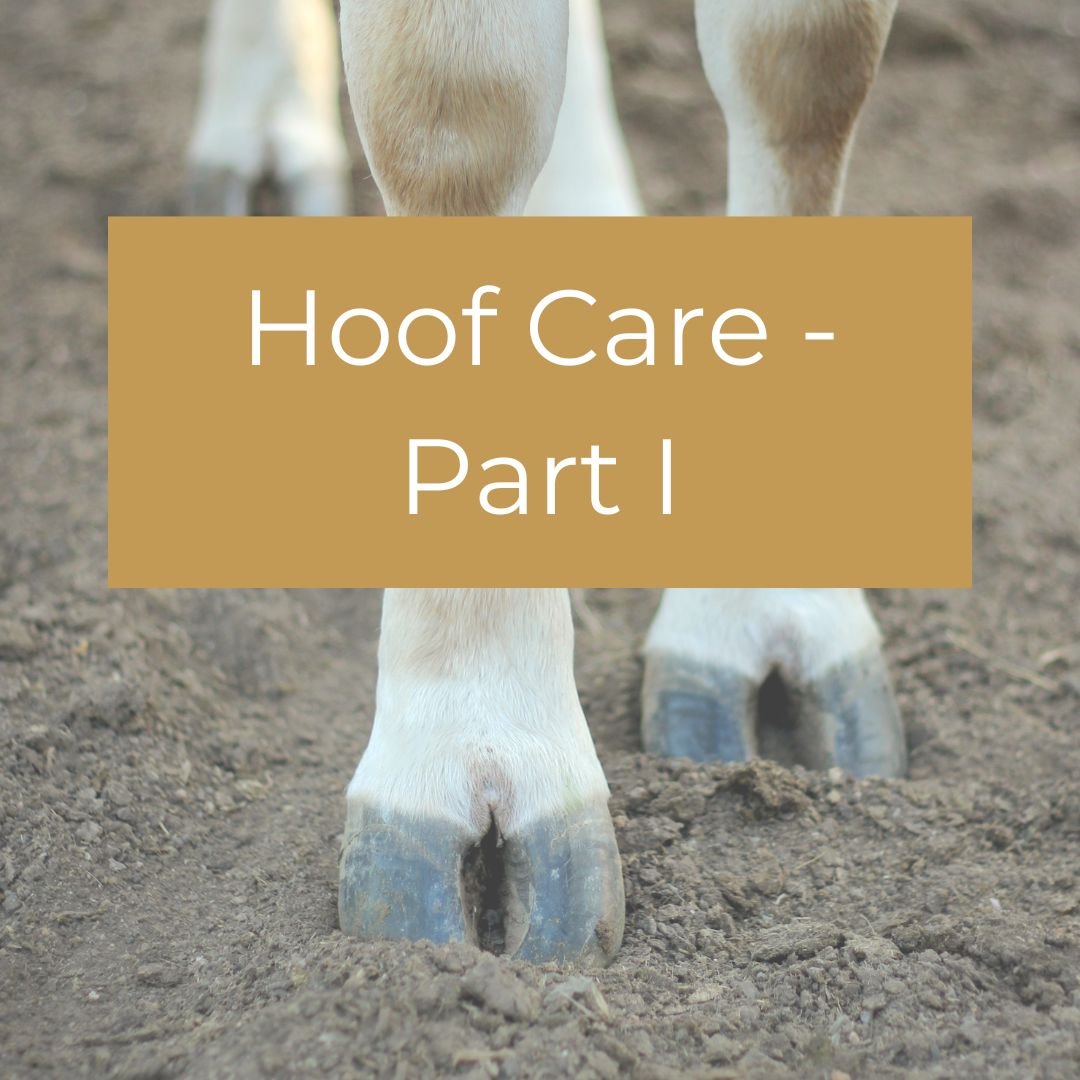
Humans need right fitting shoes, nail trims and clean feet. The same principle goes for cows: their hooves need proper care. After all, think about all that those feet have to carry! There’s a lot of weight, through winter or summer, on rough terrain, grass or concrete, pregnant or lactating.

Signs of a Healthy Hoof
What I look for when they’re walking is an even gait with balanced weight bearing on all four legs. Their back will be level and their head steady while walking or standing. I want their hooves to look smooth, without cracks, overgrowth or abnormal wear that shows pressure points. They should be cool to the touch (depending on the weather) and smell fresh. Healthy feet have a natural looking shine to them and will be self cleaning.
First things first, let’s look at hoof anatomy.

Beginning in the center, a hoof consists of:
The coffin bone, which gives the structure to the foot.
Then comes the laminae (pink in the illustration), which connects the hoof wall to the coffin bone and can best be described as velcro.
The white line, which you can see on the bottom of any hoof, is the laminae. It shows you the internal structure of the hoof: laminae as the soft tissue between the bone and the outer wall.
The sole is the part of the hoof that directly touches the ground.
Lines in the hoofwall
You can see lines in every hoofwall, which are caused by big shifts in their diet or environment. Such as minerals added or taken away, grass or hay, grain or no grain. They can also happen because you shifted pastures or due to a severe weather change. The hoofwall takes a year to completely regrow so if you see a line in the middle, it has been a change that was made several months ago.
Strengthening the hoofwall
If you feel the hoof wall needs some strengthening, you can give your cow some biotin. Zinc, copper, calcium and sulfur also play a big role in the sturdiness of the hoof wall.
Why we trim
By properly trimming your cow, you ensure that the laminae stays tightly connected in its velcro function, which is what you want. If the toe gets too long, the hoofwall will slowly get more and more separated from the coffin bone, which can lead to nasty inflammation and lameness.
Trimming shapes the hoof well so that your beloved cow is comfortable. Think of it as walking around in proper fitting shoes instead of shoes that are too big and not shaped like your feet.

Trimming methods
There are several ways we can go about trimming, such as traditional trimming, barefoot trimming and letting nature take its course. They all have their pros and cons, and we’ll look more closely at these in Part III.
To conclude
A hoof is an integral part of the cow and needs good care so your cow can thrive, feel good and carry her magnificent body around with grace.
About the Author


